
Thursday, November 3, 2016
David Cornies (1794 - 1873) Gravestone
Margarita Dick photographed this gravestone in Ohrloff in 2016...


Wednesday, October 12, 2016
The Eviction of Peter Cornies, Molotschna 1929
Information provided through Jerry Dick follows...
English:
The Toews family in Ohrloff were neighbours of Peter Cornies. A significant event involving this Cornies family was documented by Susan Toews in three letters to her brother, Gerhard, in Canada.
Note: As stated in a previous post, portions of Susan's many letters were later translated, edited and compiled by historian John B. Toews and published in 1988 by Bethel College, North Newton, Kansas. The book is titled "Letters from Susan" and is available On-line, see,
http://mla.bethelks.edu/books/wedel_series/letters_from_susan.pdf
The details of this event were kept alive in the oral history of the Toews family and passed down from generation to generation, finally to Susan's grandnieces, Katharina Petker and Antonina Lammert. Katharina has provided the following summary.
In a letter on May 21st, 1929, Susan wrote,
"A lot has happened here during the last several weeks, but none of it is happy. On Good Friday towards evening just after we had mailed the last letter, the Peter Cornies family received notification that they were to be gone from their house and yard within five days. In a word, they were evicted. A large auction was held on the last day of the Easter holiday; they sold everything and did very well. Then, on a later day, they left for Memrik.
The ladies in the chancellery are also supposed to be gone soon. A lot of fuss has been created over the furniture that they have in the second story. The common folks say that they are the Cornies' things, so the upper story and all the living quarters have been sealed."
Then on June 11th, 1929, Susan wrote again,
"Yesterday, three wagon teams took the Cornies archive to Halbstadt."
Loss of these irreplaceable records was a tragedy for the entire Ohrloff community and details of their confiscation were recounted in the Toews family for decades. Katharina has recorded the story of what happened as told to the descendants, which is the following.
"A few people came in and said to the housewife that she must spread two bedsheets on the floor. The entire archive was laid out on these sheets - church books that had been collected over more than a hundred years; the sheets were then taken by the corners, carried outside, and loaded onto the wagons. This archive included the document that Katherine the Great and Frederick the Great had both personally signed regarding the release of the Mennonites from Prussia and their admission to Russia."
Susan's final reference to this event was provided in her letter of July 21st, 1929 in which she states,
"The veterinarian has moved into the Peter Kornies building, and the two ladies are still living in the Chancellery, who knows for how long yet,..."
Deutsch:
Die Töws Familie in Ohrloff waren Nachbarn von Peter Cornies. Ein bedeutendes Ereignis dass diese Cornies Familie betraf wurde von Susanna Töws in drei Briefen an ihren Bruder, Gerhard, in Kanada dokumentiert.
Anmerkung: Wie in einer früheren Post schon erwähnt, wurden Teile Susannas Briefe später vom Historiker John B. Toews übersetzt, bearbeitet und zusammengestellt und im Jahr 1988 von Bethel College, North Newton, Kansas veröffentlicht. Das Buch hat den Titel "Letters from Susan", und ist On-line zugänglich, sehe,
http://mla.bethelks.edu/books/wedel_series/letters_from_susan.pdf
Die Einzelheiten dieser Geschichte wurden durch mündliche Überlieferung in den Erinnerungen der Töws Familie behalten und von Generation zu Generation weitergegeben, zuletzt noch zu Susannas GroßNichten, Katharina Petker und Antonina Lammert. Katharina hat die folgende Zusammenfassung zur Verfügung gestellt.
In einem Brief von 21.05.1929 schrieb Susan,
"Hier ist in den letzten Wochen sehr viel passiert, aber nichts Erfreuliches. Carfreitag gegen Abend, als wir den vorigen Brief eben abgeschickt hatten, bekamen Peter Corniesen die Nachricht, dass sie innerhalb 5 Tage von Haus und Hof [weg] sein sollten, mit einem Wort gesagt, sie wurden fortgejagt. Da war denn Ostern letzten Feiertag großer Ausruf, haben alles verkauft und auch sehr gut eingenommen, dann sind sie des andern Tages abgefahren nach Memrik.
Die Tanten aus der Kanzlei sollen auch bald fort, da hat es schon viel Schererei gegeben wegen ihren Möbeln, welche sie im zweiten Stock haben, denn das Pöbel sagt, dass die Sachen Cornies gehören, der oberste Stock und das ganze Wohngebäude sind alle verriegelt.".
Dann, am 11.06.1929, schrieb Susan wieder,
"Gestern haben drei Fuhrwerke das Archiv von Cornies nach Halbstadt gebracht."
Der Verlust von diesen unersetzlichen Aufzeichnungen war eine Tragödie für die gesamte Ohrloffer Gemeinschaft und die Einzelheiten ihrer Abholung wurden Jahrzehnte lang in der Töws Familie widerholt. Die Erzählung, was passiert ist, sowie es von den lebenden Nachkommen erwähnt war, ist die folgende von Katharina geschrieben,
"Paar Leute kamen herein und sagten der Hausfrau sie soll zwei Bettlaken auf dem Boden ausbreiten. Auf diese Laken wurde das ganze Archiv gelegt- Kirchenbücher, die über hundert Jahre angesammelt wurden, die Laken wurden dann an die Zipfel genommen, hinausgebracht und in die Fuhren geladen .
Im selben Archiv befand sich auch das Dokument, welches Katharina die Große und Friedrich der Große beide eigenhändig unterschrieben hatten wegen Entlassung aus Preußen und Aufnahme der Mennoniten in Rußland."
Susannas letzter Hinweis auf diese Geschichte wurde in ihrem Brief von 21.07.1929 geschildert,
"In Pet. Kor. ihr Gebäude da ist der Vieharzt hineingezogen, und in der Kanzlei da hausen die Tanten noch immer, wer weiß wie lange noch,..."
Friday, August 5, 2016
Correspondence between Johann Cornies (b. 1789) and his son Johann J. Cornies (b. 1812)
Dr. John Staples (State University of New York) has been kind enough to provide a translated letter between father and son from his research on the life of Johann Cornies (b. 1789). Dr. Staples writes...
"This was written about a year after Johann Jr.’s wife Justina Wilms (the step-daughter of Wilhelm Martens) died. Jr. was traveling in Prussia. The “Justina” mentioned in the letter was the daughter of Johann Jr. and Justina, who was left in the care of her grandmother while Johann Jr. was away. Johann Jr.’s son, also Johann, was left with his sister Agnes and her husband Philip Wiebe."
The letter is as follows...
Johann Cornies to Johann Cornies, Jr.
5 April 1847
My beloved son,
Your dear Mother caught a severe cold on Wednesday immediately after Easter and became ill. It was an illness that included severe diarrhea that quickly weakened her to such a degree that the doctor, who had been called immediately, could only provide a little relief but do nothing to cure her. She grew weaker and weaker and, to our great sorrow, departed for a better life at two o’clock in the afternoon of the fifth day of her illness, 30 March. She was buried in the Ohrloff community cemetery on 2 April.
As painful as the passing of our beloved mother is, we must remember, to our own great comfort, that the departed had experienced long years of repeated illness and prepared herself for this release with a steadfast Christian belief and that she went to sleep with peace in her soul.
I write to you out of fatherly love to give you support and consolation, but in the certain hope that you will accept God's unfathomable wisdom and not give yourself up to continuing, irrational sorrow and grief. ‘What God does is always well done.’ You know that Mother wanted you to make the journey to Prussia as much as I did. She encouraged me to write to you and grant you permission to travel even farther than Prussia. So do not despair. Carry out the purpose of your journey. May God grant you a quiet, peaceful heart and cheerful contentment! Time will lessen your pain little by little. This is the advice and the simple wish of your father who loves you with all his heart. Amen!
Your uncle and Klaassen, his travelling companion, arrived safely and in good health during the Easter holidays. All of us were pleased to hear that your health is good and that you were happy and in good spirits. He arrived just when spring seeding was beginning.
Your son continues to be healthy and well and is already wearing pants. This gives him a great deal of pleasure. Mrs. Martens, who was here for Mother's funeral, told me that Justina is well but did not want to bring her along because of the raw weather. I repeat, and cannot press it upon you sufficiently, that a good governess is absolutely essential for you, especially for little Johann. Very good qualities are revealing themselves in the boy. He is an eager child who understands his aunt quickly. She is giving him good direction. Almost all of the people who had known his great-grandfather say that your son resembles him entirely in regard to his features, characteristics and behaviour.
In conclusion, I ask you to give many hearty and sincere greetings to my beloved friend Johann Wiebe and his dear wife, and also to all the relatives and acquaintances who remember me with love. Your brother-in-law, sister and Uncle Klassen send greetings to you. Keep God in your sight and in your heart. This is the wish of your loving father, Johann Cornies.
From State Archive of the Odessa Region, 89-1-1260/39
Saturday, May 28, 2016
Comments and Questions from Dr. John Staples
Dr. John Staples writes the following and asks for specific information from our readers...
I found my way to this email address from your wonderful Cornies geneology website, but I'm not quite certain whom to address myself to.
--
I found my way to this email address from your wonderful Cornies geneology website, but I'm not quite certain whom to address myself to.
My main purpose in writing is to thank you. I have been trying to figure out how to subscribe to, or post to, your site so I could express my thanks there, but I can't quite figure it out.
As you may know, I'm a historian, and working on a biography of Johann Cornies (the 1789-1848 Johann). The project is pretty far advanced, and as I've been trying to pin down some of the details of the family history your site has helped me tremendously.
If I could figure out how to post I would offer a tidbit of information that doesn't appear on your site, suggest a source that doesn't seem to have been exploited by genealogists and ask a couple of questions:
1. My tidbit: the date of death of Maria Cornies, wife of Johann Martin Cornies. According to her son Johann, she was buried on the 17th of July, 1833 (Julian), or 29 July (Gregorian). He doesn't give the date of birth, but it was probably roughly 4 days earlier. (This comes from Transformation on the Southern Ukrainian Steppe: Letters and Papers of Johann Cornies. Volume I: 1812-1835, document 373, pp. 330-31).
2. My untouched source: There is a large collection of papers from the family of Philip and Agnes Wiebe (Johann's daughter) in the Braun archive. These contain personal correspondence that has, as far as I know, never been looked at. I hope to have a close look at it later this summer, and if you are interested I'd be happy to let you know what I find.
3. Question 1: Does anyone know when Heinrich (b. 1806) died? This always get left blank.
4. Question 2: Does anyone know anything about Johann's wife, Agnetha nee Klassen? The author of the Halbstadt cloth mill, Johann Klassen, sometimes calls Johann "brother," and I'd love to know if he was Agnes' brother. I also wonder if the Ohrloff miller Klassen, for whom Johann worked briefly around 1807-08, might have been her father?
Thanks again for your site.
Best,
John
Dr. John Staples, Ph.D.
Department of History
State University of New York at Fredonia
Department of History
State University of New York at Fredonia
Friday, December 4, 2015
Cornies Family as Refugees
There has been much news coverage around the world related to the plight of the Syrian refugees. Journalist, Larry Cornies, wrote an opinion column that recently was published in the London Free Press and St. Catharines Standard comparing the plight of the Syrian refugees with that of his Grandparents who left Ukraine for Canada in 1924.
That column can be read by clicking the link below...
http://www.lfpress.com/2015/11/27/cornies-refugee-tales-stir-echoes-of-nations-past
That column can be read by clicking the link below...
http://www.lfpress.com/2015/11/27/cornies-refugee-tales-stir-echoes-of-nations-past
Additional information related to Group Photograph from O(h)rloff
Jerry Dick provided additional information related to the post Group Photograph from Orloff:
English...
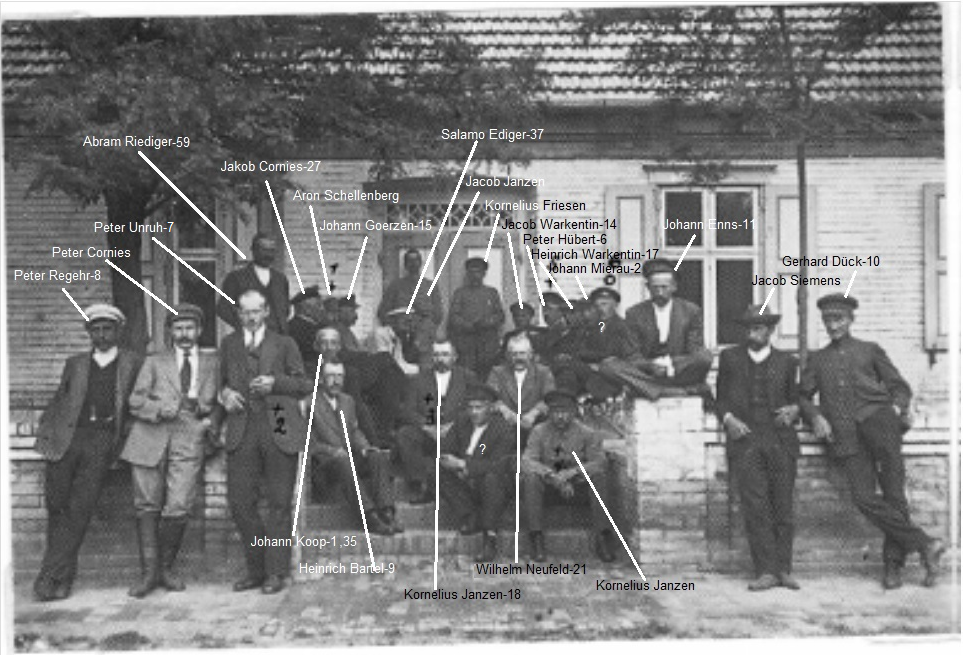
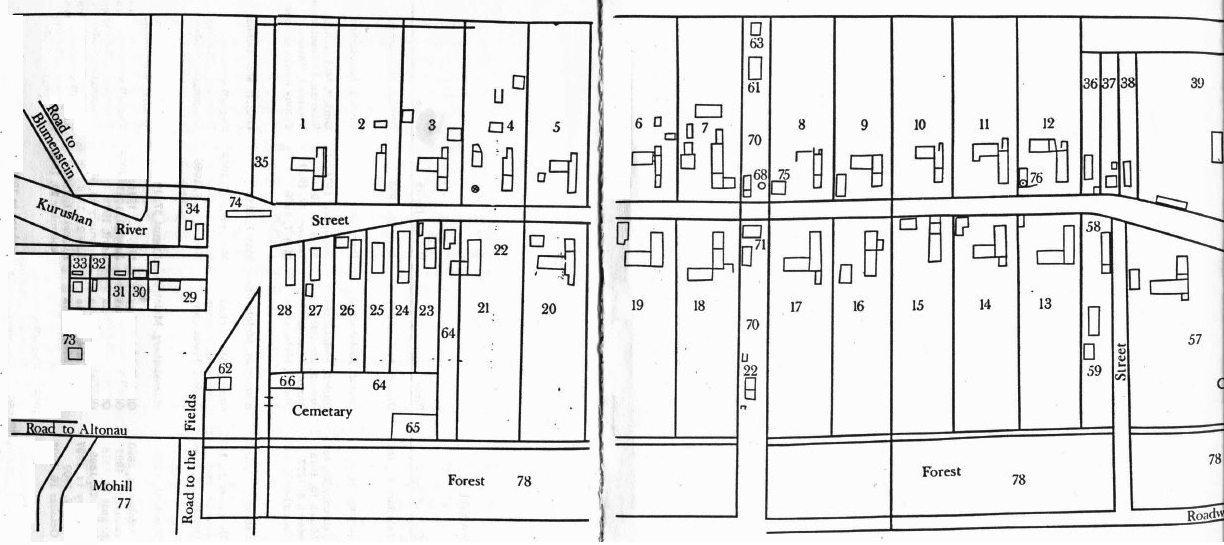
The Jacob Cornies identified as the owner of property #27 could possibly be this individual:
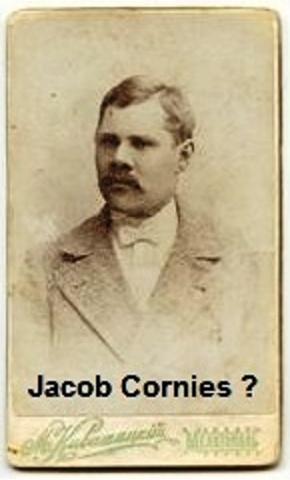
This is the same individual shown in the post here.
English...
Katharina Petker and I tried to find out more about the Cornies family by examining letters written between 1927 and 1941 by a young Ohrloff woman named Susan Toews (1892-1943). The letters were translated, edited and compiled by historian John B. Toews and published in 1988 by Bethel College, North Newton, Kansas. The book is called "Letters from Susan" and Bethel College has recently made it available On-line, see http://mla.bethelks.edu/books/wedel_series/letters_from_susan.pdf
Our initial effort involved matching the Ohrloff property owners shown in the schoolhouse picture (postings on May 20, 2015 and January 2, 2010) with the Gerhard Toews property map in Appendix B of "Letters from Susan". The landowners with their property numbers plus a portion of the map identifying the properties are shown below. The man identified as "Jacob Cornies" owned Property #27 in Ohrloff. He appears to be a big man and might even be the man in a picture posted April 2, 2010, also shown below. It is also significant that the logo below the portrait is that of the local Ohrloff photographer, unlike that of most of the other men in the same posting.
Susan's letters all convey local news about relatives, friends and neighbours in Ohrloff. In a letter on March 29, 1929 she writes, "As you heard big Cornies recently received his pass". It is almost certain that "big Cornies" was Jacob Cornies as his property (#27) was just across the street from the Toews family property, which was #3. Since we are told that he received his passport in early 1929, he probably emigrated later in 1929. Perhaps his appearance, property location and emigration date will help someone find out more about this branch of the Cornies family.
German...
Katharina Petker und ich haben versucht mehr über die Familie Cornies zu entdecken durch die Untersuchung der Briefe von einer jungen Ohrloffer Frau namens Susan Toews (1892-1943). Zwischen 1927 und 1941 geschrieben, wurden die Briefe später vom Historiker John B. Toews übersetzt, bearbeitet und zusammengestellt und im Jahr 1988 von Bethel College, North Newton, Kansas, veröffentlicht. Das Buch heißt "Letters from Susan" und wurde kürzlich von Bethel College On-line zugänglich gemacht, sehe
Zum Anfang haben wir die Namen von den Ohrloffer Gutsbesitzer am Schulhaus Bild (sehe Postings am 20. Mai 2015 und 2. Januar 2010) mit den Gutsbesitzern der Ohrloffer Karte von Gerhard Toews verglichen (sehe Anhang B des "Letters from Susan"). Die Gutsbesitzer mit ihren Güternummern und ein Teil der Ohrloffer Karte sind unten gegeben. Man sieht dass der "Jacob Cornies" die Wirtschaft #27 besaß. Er scheint ein großer Mann zu sein, und möge sogar der Mann auf dem Bild von 2. April 2010 sein, auch unten zu sehen. Es ist auch bezeichnend dass das Logo der Porträt dem Ohrloffer Fotograf gehört, im Gegensatz zu den meisten Bildern von Männern in der gleichen Fotosammlung.
Susans Briefe vermitteln Nachrichten über Verwandten, Freunden und Nachbarn in Ohrloff. In einem Brief vom 29. März 1929, schreibt sie, "Wie wir gehört haben, hat der große Cornies unIängst seinen Pass erhalten, wie schön das sein wird jetzt zum Frühling oder Sommer dorthin zu fahren, es ist fast nicht zu denken, wie herrlich das würde sein." Es ist beinahe sicher dass der "große Cornies" der Jacob Cornies ist, weil seine Wirtschaft #27 fast genau über die Straße von der Töws Wirtschaft #3 ist. Da uns gesagt ist dass er seinen Reisepass Anfang 1929 erwarb, ist er wohl später im Jahr 1929 ausgewandert. Vielleicht ist sein Aussehen, Lage der Wirtschaft und Datum seiner Auswanderung für jemanden hilfreich, mehr über diesen Zweig der Familie Cornies zu entdecken.
The Jacob Cornies identified as the owner of property #27 could possibly be this individual:
This is the same individual shown in the post here.
Thursday, November 5, 2015
Mennonitisches Familienforschungs Forum
For our German readers, a forum has been established by Hermann Schirmacher from Quito, Ecuador for researching genealogical history. You can reach that forum by clicking on the link below...
http://mefor.org/forum/
http://mefor.org/forum/
Subscribe to:
Posts (Atom)
